Choosing the right radiator is crucial for optimal engine performance. When contemplating "how to choose between a single-row and dual-row radiator?", several factors come into play. Each design has unique characteristics that can impact your vehicle's cooling efficiency.
Single-row radiators are generally lighter and easier to fit in tight spaces. They may suffice for standard driving conditions. However, they may struggle under high-performance situations. On the other hand, dual-row radiators offer increased cooling capacity. This can be particularly beneficial for modified engines or heavy-duty applications.
Understanding your specific needs is key. A single-row might seem attractive due to its simplicity. But if your vehicle demands higher cooling efficiency, a dual-row could be the better choice. Overheating can lead to engine damage, so think carefully about your options. Your decision should align with how you drive and what you expect from your vehicle.
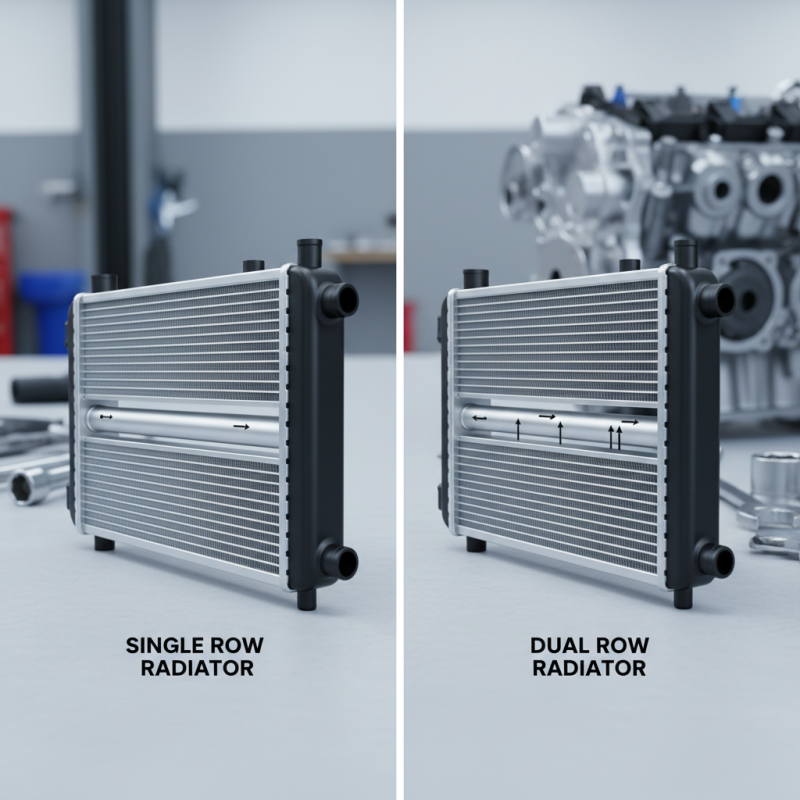
When selecting radiators, performance hinges on multiple factors. One significant aspect is the heat dissipation capacity. Single row radiators, often lighter and more compact, are suitable for lower-powered engines. They typically lose efficiency under high demand. Conversely, dual row radiators offer enhanced cooling due to their larger surface area. Reports indicate that dual row designs can improve cooling efficiency by up to 30% in high-performance applications.
Another important factor is the overall size and fit within the vehicle. Radiators must fit snugly in the designated space without obstructing airflow. Dual row radiators might require adjustments or redesigns, especially in tighter engine compartments. Moreover, weight distribution is affected. A well-balanced vehicle performs better, thus impacting the choice for racing applications.
The construction material also plays a crucial role. Aluminum radiators provide excellent thermal conductivity, while brass offers durability. Data shows that aluminum options can reduce weight by approximately 25%, leading to improved performance metrics. However, not all aluminum radiators are created equal. Quality control issues exist, leading to potential failures in cheaper models. Investing in well-reviewed construction is wise for long-term durability.
| Factor | Single Row Radiator | Dual Row Radiator |
|---|---|---|
| Cooling Efficiency | Moderate | High |
| Installation Space | Less space required | More space required |
| Weight | Lightweight | Heavier |
| Cost | Lower | Higher |
| Heat Dissipation | Average | Superior |
: Heat dissipation capacity is crucial. It affects overall performance.
Single row radiators are compact and lighter. Dual row radiators have more cooling capacity.
They offer up to 30% better cooling efficiency. They handle high-performance demands well.
Yes, they can be heavier and require more space. This may affect performance.
Compact cars and motorcycles benefit from their lightweight design. They handle lower horsepower well.
Aluminum is lightweight and conductive. Brass offers durability but is heavier.
No, some lower-quality aluminum radiators can fail. Investing in well-reviewed options is wise.
They can effectively cool vehicles producing up to 300 horsepower.
Radiators must fit snugly without blocking airflow. Proper fitting is essential for efficiency.
A balanced vehicle performs better. It matters especially in racing scenarios.
When considering how to choose between a single-row and dual-row radiator, it’s essential to evaluate several key factors. These include engine size, cooling requirements, and intended vehicle use. Single-row radiators generally offer lighter weight and lower costs, making them suitable for applications with less intense cooling demands. In contrast, dual-row radiators provide enhanced cooling efficiency, making them better for high-performance or heavily modified vehicles.
Additionally, the radiator design significantly influences cooling efficiency, with dual-row configurations enhancing heat dissipation. Evaluating the cost versus performance of each option can help in making an informed decision, ensuring that the chosen radiator aligns with specific performance needs and budgetary constraints. Ultimately, understanding these variables will guide you in selecting the most appropriate radiator type for optimal performance.

 Rock Auto